
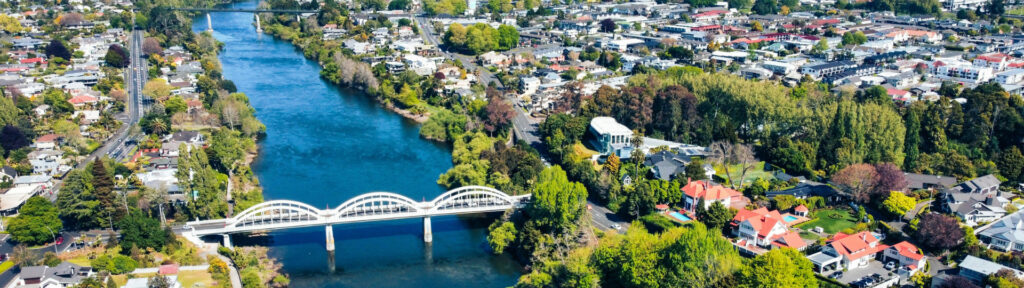
Hamilton has undergone a remarkable transformation over the past three decades. Once known primarily as an agricultural and industrial centre, it has evolved into one of New Zealand’s fastest-growing cities, attracting new residents, businesses and investment from across the country.
As the city has grown, so too has its built environment. New commercial developments, healthcare facilities, educational campuses and residential communities have reshaped Hamilton’s identity, creating a city that is increasingly recognised for its innovation, connectivity and quality of life.
Architecture has played an important role in that transformation. Well-designed buildings do more than meet practical needs. They help define how a city functions, how people experience it, and how it continues to grow.
A City Looking Forward
For many years, Hamilton’s image was heavily influenced by the industrial landscape that greeted visitors travelling along Te Rapa Road. While this reflected the city’s strong manufacturing and agricultural economy, it did little to showcase Hamilton’s wider strengths or ambitions.
Over time, there has been a conscious effort to invest in both infrastructure and the public realm. Significant projects such as the Waikato Expressway, the Ruakura Superhub, ongoing development at Waikato Hospital and the continued growth of the University of Waikato have strengthened Hamilton’s position as a major economic and educational hub for the upper North Island. These investments have encouraged new businesses, supported employment and attracted a growing population, while also creating opportunities for neighbouring centres such as Cambridge and the wider Waikato region.
This growth has created demand for architecture that is practical, adaptable and capable of supporting a rapidly changing city.
Finding an Architectural Identity
As Hamilton has matured, its architecture has become more confident.
Rather than simply accommodating growth, many recent developments have sought to strengthen the city’s identity by responding to its landscape, culture and history. The Waikato River, once overlooked by much of the central city, has become an increasingly important feature in new developments and public spaces, reconnecting people with one of Hamilton’s defining natural assets.
Hamilton Gardens provides another example of how thoughtful planning can shape the identity of a city. What was once a former landfill has become an internationally recognised visitor destination, demonstrating how long-term vision and investment can transform both a site and the way people experience a place.
At the same time, Hamilton has worked to balance contemporary development with its existing architectural character. Heritage buildings continue to contribute to the city’s identity, while new projects increasingly acknowledge the cultural history of the region and the significance of Te Ao Māori within the built environment.
The most successful architecture does not seek to dominate its surroundings. Instead, it responds to its context, creating buildings that feel connected to the places they belong.
Designing for a Growing Hamilton
Growth brings opportunity, but it also brings responsibility.
As Hamilton continues to expand, architects have an important role in creating buildings that not only meet today’s requirements but remain valuable for decades to come. This means designing spaces that are flexible, durable and able to adapt as communities, businesses and technologies evolve.
Good design also contributes to the wider success of a city. Well-planned commercial buildings encourage investment. Healthcare and education facilities support thriving communities. Public buildings and civic spaces foster connection and create places where people want to spend time.
Architecture is therefore about much more than individual buildings. Every project contributes to the character, function and long-term resilience of the city as a whole.
Looking Ahead
Hamilton’s future is bright. Major developments already underway, together with continued investment in transport, healthcare, education and industry, will continue to shape the city’s skyline and strengthen its role as one of New Zealand’s leading regional centres.
For architects, this presents an exciting opportunity to create buildings that respond thoughtfully to their surroundings while supporting the city’s continued growth.
At Esse Architects, we believe successful architecture begins with understanding place. Every project should reflect the people who use it, the environment it sits within and the community it serves. As Hamilton continues to evolve, thoughtful design will remain central to creating buildings that not only perform well today but contribute positively to the city’s future.